How VAR Works: World Cup 2026 Rules
VAR, the video assistant referee, is a match official with independent access to match footage who may help the on-field referee in only four situations: goals, penalties, direct red cards and mistake...
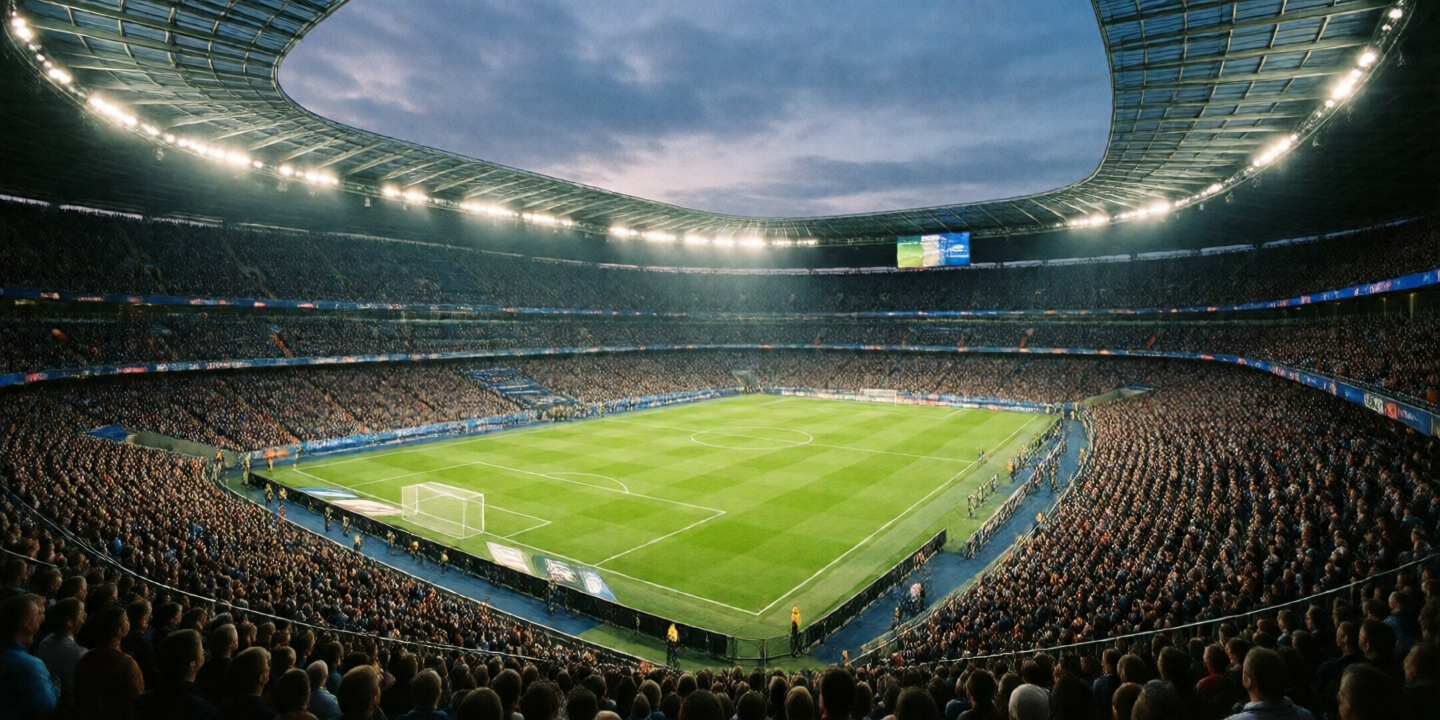
How VAR Works: World Cup 2026 Rules
VAR, the video assistant referee, is a match official with independent access to match footage who may help the on-field referee in only four situations: goals, penalties, direct red cards and mistaken identity. Under the IFAB protocol that FIFA competitions follow, including the 2026 World Cup, the VAR steps in only for a "clear and obvious error" or a "serious missed incident". The referee always makes the first decision, only the referee can start a review, and the referee owns the final call, either on the VAR's advice or after an on-field review at the pitchside monitor. No clock limits the process, because accuracy ranks above speed. Second yellow cards, throw-ins and free kicks sit outside its reach. In short, VAR is a safety net, not a second referee. If you follow matches or markets, judge the original on-field call first, then ask whether it fits one of those four categories.
Fan Strategy spent the tournament's 39 days of fan celebrations watching these reviews, and this guide is what we took away from it.
The Bottom Line
Here is the whole system in one breath. A referee makes a call. A team of officials in a video room checks that call against replays. If, and only if, they see a clear and obvious error in one of four categories, they tell the referee, and the referee decides what happens next. That is it (and yes, I know you wanted something more dramatic).
Most of the shouting about VAR comes from people who never read the rules it runs on. They expect a robot that fixes every injustice. What they get is a narrow tool with a very high bar for overturning anything. The IFAB protocol says the VAR may assist only in the event of a "clear and obvious error" or "serious missed incident". Note the word "clear". A decision that is merely debatable stays exactly where the referee put it. Think of it like a margin of error. The referee gets a wide band of calls that are defensible, and the VAR only acts when a call falls outside that band. If you keep that one idea in your head, 80% of the arguments you hear in pubs and comment sections collapse on their own. (You know how it is.)
What Players Actually See
The players see very little, and that is deliberate. A referee presses a finger to an earpiece, play stops, and the player has no idea who is talking or what they are looking at. Then comes the TV-screen gesture: the referee traces a rectangle in the air. That is the only public signal that a review is underway.
The protocol bans the usual crowding. Players and team officials "must not surround the referee or attempt to influence" the review or the final decision. The referee also has to remain visible throughout, so the process looks transparent even when nobody can hear it. Another detail most fans miss: nobody on the touchline can ask for a review. Because the VAR automatically checks every situation, coaches and players have no request to make, and Principle 12 in the protocol says so directly. Only the referee can initiate a review, and the VAR can merely recommend one.
So when you see a captain gesturing at the screen, understand that it changes nothing. It is theatre, and I say that with love. What matters is a small group in a video room, a referee's earpiece, and, when the call is subjective, a walk to the pitchside monitor.
how referees signal decisions on the pitch
How Does VAR Work, Step by Step?
A VAR team silently checks every goal, penalty, red card and mistaken-identity incident on replay. If it spots a clear error, it tells the referee, who either accepts the advice or walks to the pitchside monitor, watches the footage, and then makes the final decision personally.
In practice the sequence runs like this:
- The referee makes a decision on the field, or lets play continue. The referee is never allowed to give "no decision" and wait for the video room to decide.
- The VAR checks the incident on independent footage while play goes on, usually without anyone noticing.
- If the VAR sees a clear and obvious error, or a serious missed incident, it recommends a review.
- The referee either accepts the information or conducts an on-field review at the monitor.
- The referee announces the final decision, and play restarts.
Step one is the one people skip. The protocol says a decision to allow play to continue after an alleged offence can be reviewed, so "let it go" is a decision too. Step four is where the human stays in charge. The VAR supplies information, but the referee signs the verdict. I like this design, because accountability stays with a person whose face the crowd can see. A sloppy system would hide that behind a screen.
What Can VAR Actually Review?
Only four categories qualify: goal or no goal, penalty or no penalty, direct red card (not a second yellow), and mistaken identity when the referee cards the wrong player. Anything outside those boxes, such as ordinary fouls, throw-ins or yellow cards, stays with the referee alone, however wrong it looks on television.
The four categories map to the biggest swings in a match. A goal changes the score, a penalty is the highest-probability scoring chance in the sport, and a straight red changes the numbers on the field for the remaining match. Mistaken identity exists because carding the wrong player punishes an innocent one and lets the guilty one off.
Other sports have built their own versions. Dartfish notes that handball federations such as the IHF use video review at the World Championships, and it lists a wider menu of review areas for team sports in general. Football's list is deliberately shorter than that. The shortness is the point. A system that reviewed everything would never stop, and a match that never stops stops being a match.
For the history of how the idea spread across leagues and tournaments, Wikipedia's entry on the video assistant referee is a decent starting map.
The 3 Things That Matter Most
If you only retain three ideas from this article, make them these:
- The threshold is "clear and obvious", not "wrong". The original decision stays unless the footage clearly shows an error. A 50-50 call remains a 50-50 call.
- The referee must decide first. The VAR cannot take a decision the referee refused to make, so the human call is the baseline every time.
- The review window is defined by the protocol, not by the broadcast. The period of play before and after an incident that can be reviewed is set by the Laws of the Game and the VAR protocol. Replays you see on television may show more than the VAR is allowed to use.
Number one explains why identical-looking incidents sometimes get different outcomes. Two referees can make opposite calls on the same contact, and both calls can survive review because both sit inside the defensible band. Number two explains why you never see a referee shrug and pass the buck. Number three is the sneaky one. A broadcast can replay a sequence from ten seconds before the whistle, but the protocol decides which phase of play counts. When a fan insists the VAR "ignored" an earlier foul, check whether it falls inside the reviewable window before you get angry. Nine times in ten it does not (I have not measured that, so treat it as a rule of thumb, not data).
Why Does a VAR Check Take So Long?
Because the protocol has no time limit: it states accuracy matters more than speed. A check also runs in layers, with the VAR hunting for the right camera angle, confirming the start of the attacking phase, and drawing offside lines before the referee ever hears a recommendation. Complex goals can run several minutes.
The protocol puts it bluntly: "There is no time limit for the review process as accuracy is more important than speed." That is a policy choice, and it has a price. Every extra minute costs momentum, crowd energy and, for the neutral viewer, patience.
Here is the math-nerd view, with invented numbers to show the shape, not measured data. Suppose a referee misses a penalty-worthy foul in 1 of every 20 such incidents, a 5% miss rate. If the VAR catches most of those, the residual error falls well below 1%. That is a big drop in the worst kind of mistake. Now count the cost. If a check adds three minutes to each of a handful of incidents per match, you pay a small, predictable tax to remove a rare, expensive error. Fans notice the tax every week and the avoided disaster almost never, which is why the whole system feels like a bad deal to people who only watch the delays. Expected value says it is a good deal. Human nature says it is annoying. Both are true.
Edge Cases & Gotchas
This is where the technical detail pays off, and where most top-ranking explainers go quiet. These are the rules that surprise people:
- Post-incident discipline survives a reversal. If play continues after an incident that is then reviewed, any disciplinary action taken in the period afterward is not cancelled, even if the original decision changes. The exception is a caution or sending-off for stopping or interfering with a promising attack, or for denying an obvious goal-scoring opportunity.
- A restart usually closes the door. Once play has stopped and restarted, the referee may not review, except for mistaken identity or a potential sending-off for violent conduct, spitting, biting, or extremely offensive, insulting or abusive actions.
- A clearly incorrect second caution is not reviewable. Direct red cards are; a second yellow is not.
- Incorrectly awarded corner kicks are the one stated exception to the "must apply in every match" principles, so check the competition's own handbook before assuming a corner review is possible.
The first gotcha is the one that bites. Imagine a team scores, the goal is later chalked off, and a player was booked for celebrating or arguing in the interim. That yellow card can stand. A fan who assumes "the goal never happened, so nothing after it counts" will be wrong. The second gotcha matters just as much. A fan who expects a late review after a restart is usually hoping for something the protocol only allows in a narrow set of serious conduct cases.
Also remember that the protocol applies only where the organiser has met every implementation requirement in the VAR Handbook and has written permission from FIFA. Not every match you watch has VAR at all.
offside rules explained for beginners
Does VAR Change How You Read a Match?
Yes, but mostly by shrinking one kind of error, not all of them. VAR targets clear and obvious mistakes in four categories, so subjective calls, fouls that never reach a penalty and yellow cards still carry human variance. Treat it as a filter on big swings, not a guarantee of fairness.
My contrarian conclusion is that VAR should make you more careful, not more confident. It removes the dumbest errors, and that leaves a match where the remaining decisions are the contested ones, the ones where reasonable people disagree. If you follow predictions or markets, that matters. Always check how a particular market treats reviewed decisions, because settlement rules differ between operators and I will not guess them for you. Only take part if you are of legal age where you live, keep stakes small, and treat any wager as entertainment, never income.
For team-by-team angles, World Cup 2026 match predictions and tactics covers how referee tendencies fit into the picture, and player stats and discipline records shows who collects cards.
Verdict
VAR works because it is modest. It does not replace the referee, it does not review everything, and it does not hurry. It checks four categories, demands a clear error before it intervenes, and hands the final call back to the person on the field. After 39 days of watching it at the World Cup, my verdict is that the system is sound and the arguments about it are mostly misunderstandings of its own rules.
If you remember five things, make it these: the referee decides first, only the referee starts a review, the bar is "clear and obvious", the clock does not matter, and a restart usually ends the discussion. Everything else is detail. Fan Strategy will keep breaking down these rules alongside tactics and stats, so the next time a screen-rectangle appears, you will know exactly what is being asked. (Not that you ever listen, but I keep trying.)
Frequently Asked Questions
Q: What does VAR stand for in football?
A: VAR stands for video assistant referee. It is a match official who watches independent footage and can advise the on-field referee, but only on goals, penalties, direct red cards and mistaken identity. The VAR never takes the decision itself. The referee always makes the final call, either from the VAR's information or after reviewing the footage at a pitchside monitor.
Q: How do I know when a VAR review is happening?
A: Watch for the referee touching an earpiece or tracing a TV-screen rectangle in the air. Play stops, and the referee either waits for the VAR's information or walks to the pitchside monitor. The referee must stay visible throughout, so the process remains transparent. Players and team officials may not crowd the referee or try to influence the outcome.
Q: Can coaches or players ask for a VAR review?
A: No, only the referee can start a review. The VAR automatically checks every qualifying situation, so coaches and players have nothing to request, and the protocol states this explicitly. The VAR and other match officials may only recommend a review to the referee. Gesturing at the screen may feel satisfying, but it has no effect on the process.
Q: What is the difference between VAR and an on-field review?
A: A VAR review means the video team passes information to the referee, while an on-field review means the referee personally watches the footage at a pitchside monitor. Either way, the referee takes the final decision. The on-field route is typically used for subjective calls, where the referee needs to see the contact and its severity first-hand.
Q: Why does VAR sometimes not overturn a decision that looks wrong?
A: Because the bar is a "clear and obvious error", not simply a wrong call. If a decision is debatable, the original stands. Two referees can reach opposite conclusions on identical contact, and both calls can survive review. Also check whether the incident falls inside the reviewable window and one of the four categories.
Q: Is VAR used in every football match?
A: No. The protocol permits VAR only where the competition organiser has met all implementation requirements in the VAR Handbook and has received written permission from FIFA. Major tournaments and many top leagues use it, but lower divisions and many local competitions do not, so check the competition's own rules before expecting reviews.
Q: What happens to a yellow card if a VAR review changes the original decision?
A: It depends on when the card was shown. If play continued after the incident and a card was issued in the period afterward, it generally stands even when the original decision changes. The exception is a caution or sending-off for stopping or interfering with a promising attack, or for denying an obvious goal-scoring opportunity, which is cancelled.